


From “Royal Compassion” to Sustainable Forests
The story began in 1974 at Nong Lom Village, Doi Inthanon, Chiang Mai. His Majesty King Bhumibol Adulyadej The Great (Rama IX) visited the area and observed a small number of coffee trees grown by “Grandfather Phayo Taro,” a Karen hill tribe farmer.
This marked the beginning of “Father’s first Arabica coffee” under the Royal Project. With remarkable foresight, His Majesty recognized coffee as a promising economic crop—one that could replace opium cultivation while helping restore degraded highland forests.
What was once considered an experimental crop soon became a turning point—improving the livelihoods of hill tribe communities and transforming barren mountains into lush, green landscapes through coffee cultivation.
Catimor: The Resilient Heritage Variety
As coffee cultivation expanded, a major challenge emerged: coffee leaf rust, a devastating disease during 1974–1979. Extensive research led to the development of a resistant variety—Catimor, a hybrid of Caturra and Híbrido de Timor.
Catimor is highly resistant to leaf rust, easy to cultivate, high-yielding, and well adapted to diverse climates. It has since become the backbone of Thailand’s coffee industry for decades.
CATIMOR – A FASCINATING VARIETY
Despite its strength, Catimor has often been overlooked in terms of cup quality. To unlock its true potential, Phubate Siangkong, Coffee Processor Specialist, carefully selected Catimor coffees from three distinct origins in Thailand.
By applying advanced processing techniques and fermentation science—utilizing microorganisms such as yeast, fungi, and bacteria—each coffee is meticulously crafted to reveal Catimor’s hidden complexity and unique expression of terroir.
“I believe that great coffee tells its own story best.”
Phubate Siangkong, Coffee Processor Specialist
CATIMOR – A FASCINATING VARIETY
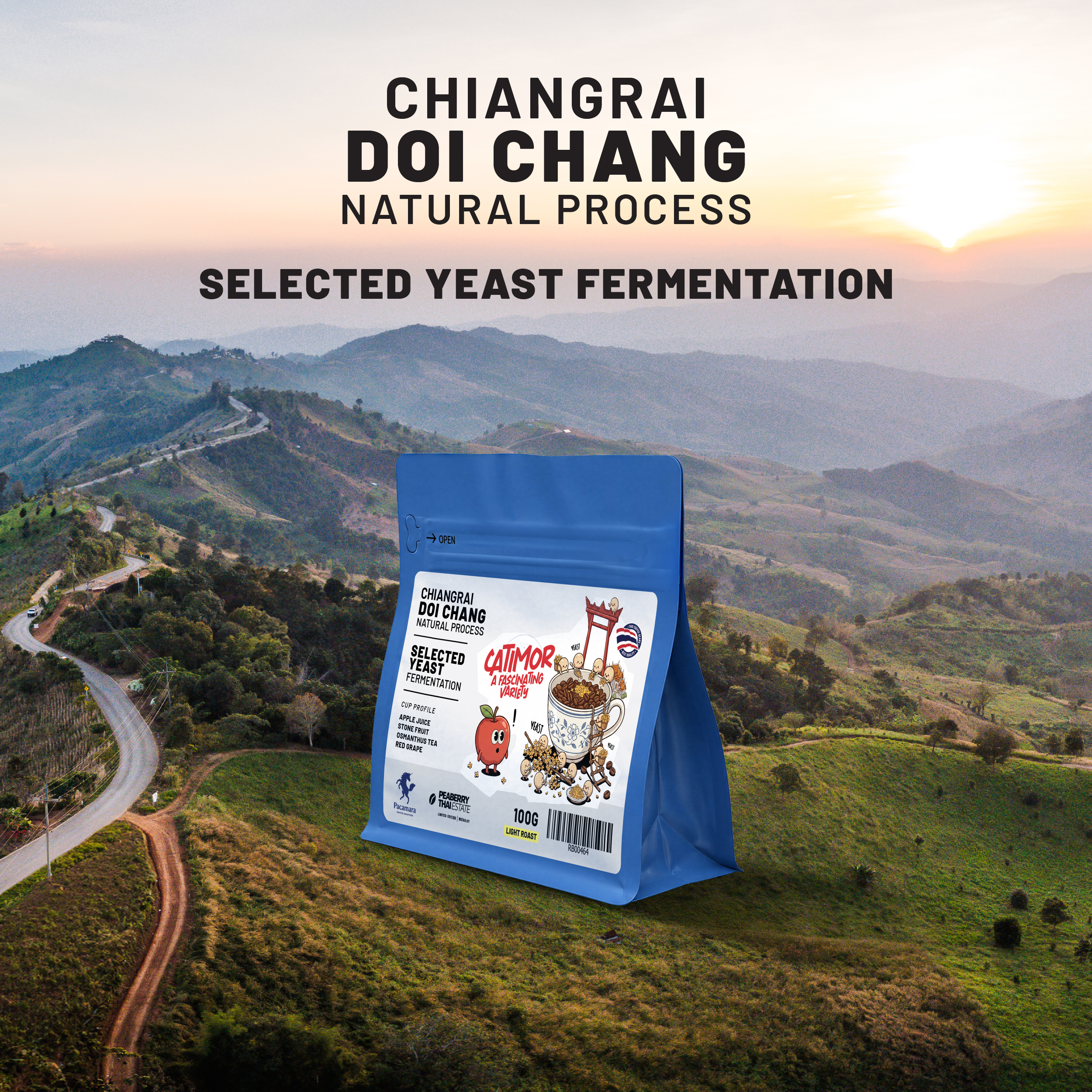
DOI CHANG, THAILAND
PROCESS: NATURAL - SELECTED YEAST FERMENTATION
ROAST LEVEL: LIGHT ROAST
CUP PROFILE: APPLE JUICE, STONE FRUIT, OSMANTHUS TEA, RED RRAPE
A Thai Catimor from Doi Chang, processed using selected yeast (Saccharomyces cerevisiae) and fermented with whole coffee cherries to enhance complexity.
The cup presents vibrant fruit notes of apple and red grape, complemented by delicate floral aromas reminiscent of osmanthus tea—clean, complex, and expressive.
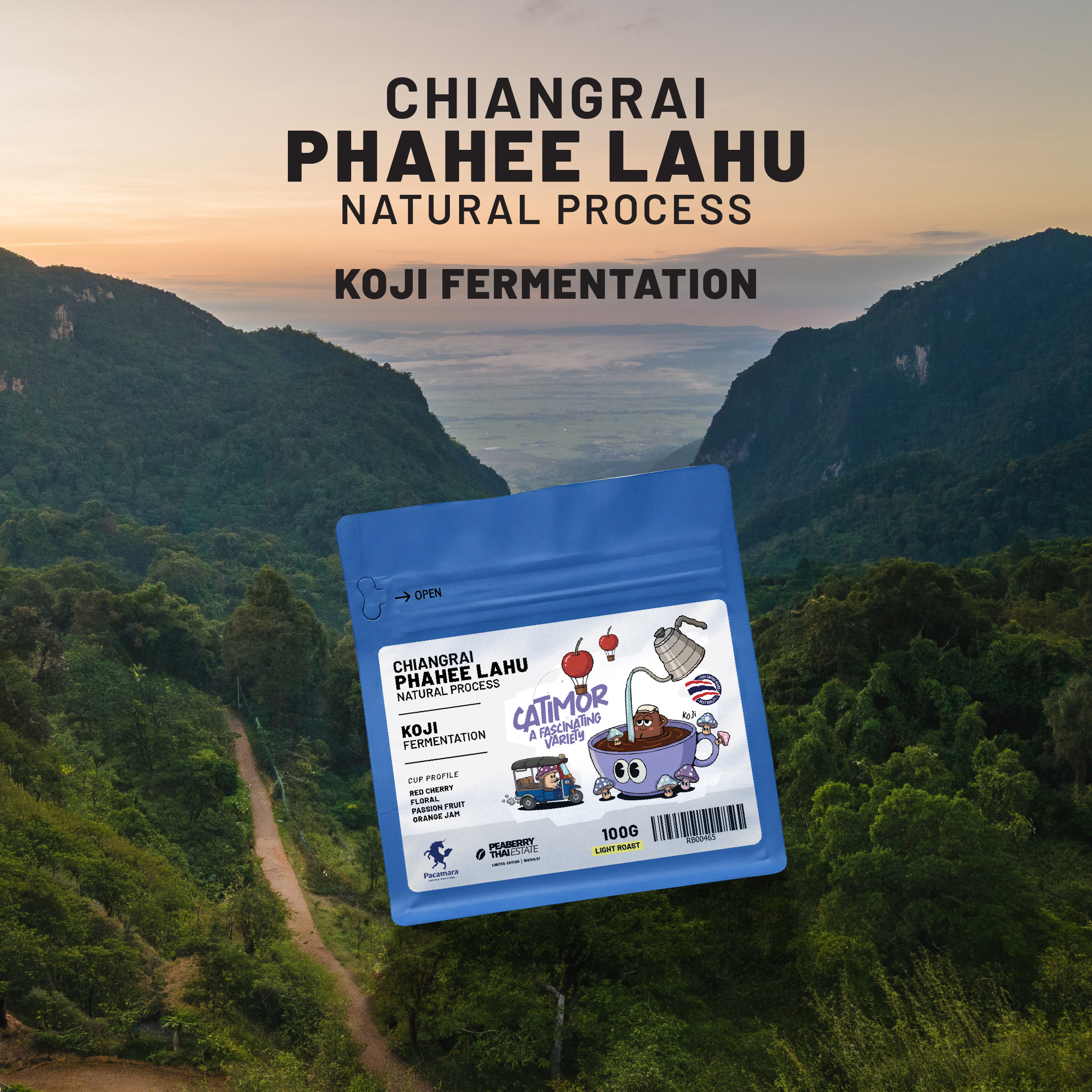
PHAHEE LAHU, THAILAND
PROCESS: NATURAL – KOJI FERMENTATION
ROAST LEVEL: LIGHT ROAST
CUP PROFILE: RED CHERRY, FLORAL, PASSIONFRUIT, ORANGE JAM
This Catimor from Phahee (Lahu community) undergoes koji fermentation using Aspergillus oryzae—the same microorganism used in Japanese sake and miso production.
The process breaks down compounds within the beans, resulting in vibrant notes of red cherry and passionfruit, layered with soft orange jam sweetness and floral aromatics—distinctive and multidim
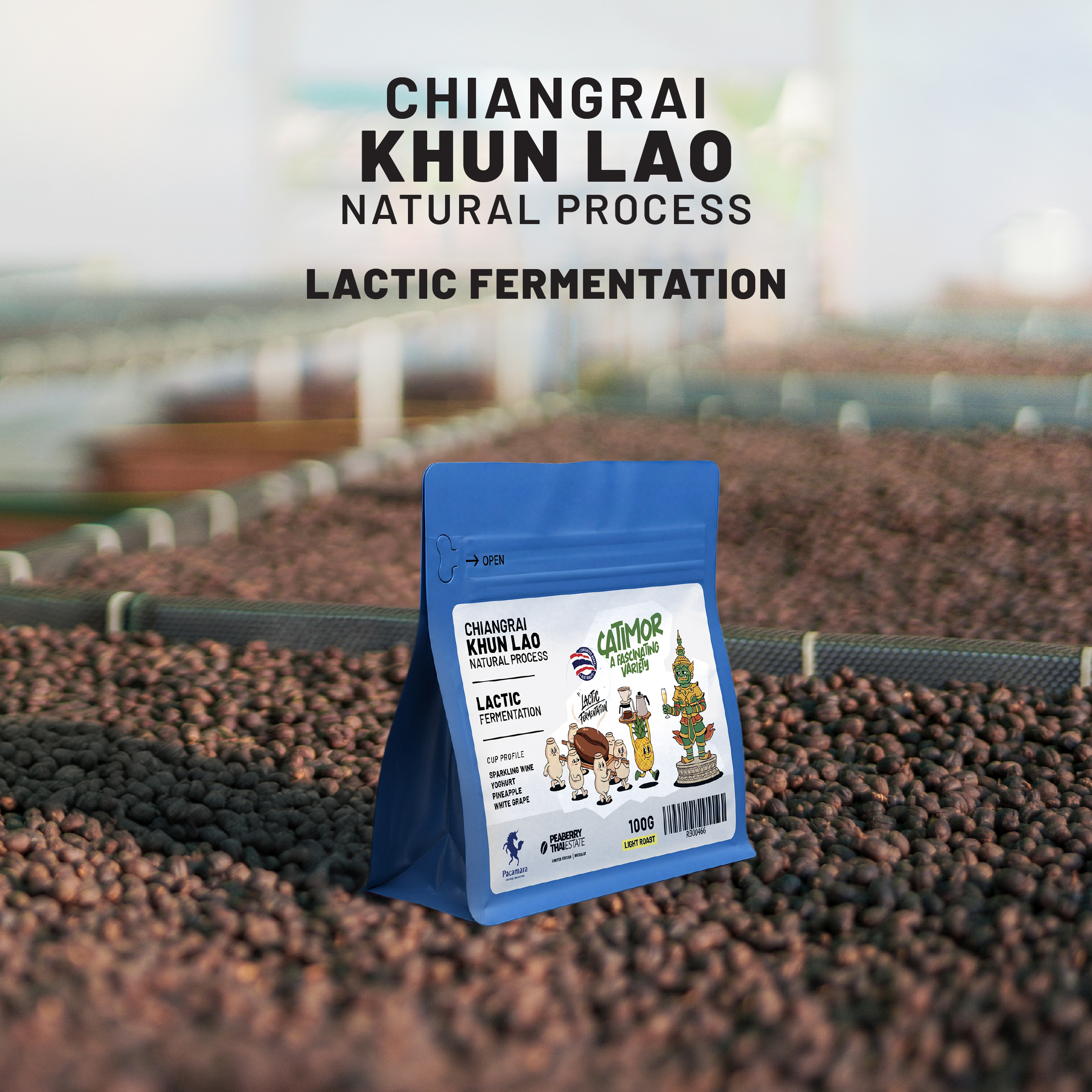
KHUN LAO, THAILAND
PROCESS: NATURAL – LACTIC FERMENTATION
ROAST LEVEL: LIGHT ROAST
CUP PROFILE: SPARKLING WINE, YOGURT, PINEAPPLE, WHITE GRAPE
From Khun Lao village, this Catimor is processed using lactic fermentation with lactic acid bacteria (LAB), commonly used in yogurt, kimchi, and pickling.
Under anaerobic conditions, sugars are converted into lactic acid, creating a bright and complex cup reminiscent of sparkling wine or champagne, balanced with yogurt-like acidity and tropical fruit notes of pineapple and white grape.
Experience CATIMOR – A FASCINATING VARIETY
at World of Coffee Bangkok 2026—one of the world’s largest coffee events. Be part of an important step in bringing Thai coffee onto the global stage.
Pacamara Coffee Roasters at Peaberry Thai Booth: B115
World of Coffee Asia (Bangkok)
13TH ANNIVERSARY BLEND EP6 – ฮักหม๊ดไจ๋ จาก 5 ดอย 8 เกษตรกร
13TH ANNIVERSARY BLEND EP6 – ฮักหม๊ดไจ๋ จาก 5 ดอย 8 เกษตรกร
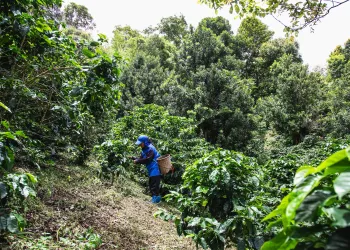
13TH ANNIVERSARY BLEND EP5 : หมู่บ้านลับบนดอยสูง บ้านอะบอโด
13TH ANNIVERSARY BLEND EP5 : หมู่บ้านลับบนดอยสูง บ้านอะบอโด
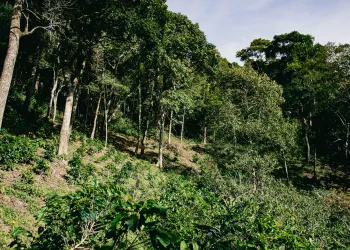
13TH ANNIVERSARY BLEND EP4 : กลิ่นกาแฟ ณ แม่จันใต้
13TH ANNIVERSARY BLEND EP4 : กลิ่นกาแฟ ณ แม่จันใต้
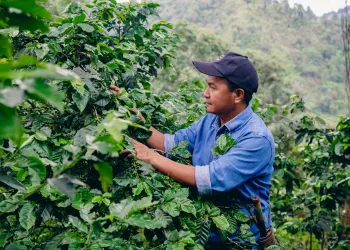
13TH ANNIVERSARY BLEND EP3 : กลุ่มชุมชนกาแฟแม่จันหลวง แห่งดอยแม่สลองนอก
13TH ANNIVERSARY BLEND EP3 : กลุ่มชุมชนกาแฟแม่จันหลวง แห่งดอยแม่สลองนอก